
The key threats seen during this period ranged from phishing attacks to rogue apps disguised as COVID-19 information apps that targeted users sensitive data.
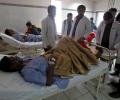
The budgetary allocation for the sector is Rs 60,908.22 crore, with Rs 6,400 crore earmarked for the centre's flagship health insurance scheme Ayushman Bharat- Pradhan Mantri Jan Arogya Yojna (AB-PMJAY).
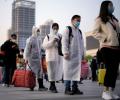
The move comes a day after China lifted the 76-day lockdown in Wuhan, where the pandemic originated. China's National Health Commission (NHC) on Thursday reported 63 new confirmed cases of the coronavirus, including 61 imported ones taking the total to 1,104 cases.
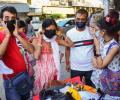
These items will remain under essential commodities segment till June-end, a move aimed at ensuring availability at reasonable prices and cracking down on hoarders/black marketeers.

'We are already exhausted, but we can't give up.' 'The battle is still on.' 'We will see some respite by December 2021.'

The Supreme Court on Monday asked all the states to explain within six weeks as to why they should not be made liable to pay compensation to persons affected by bad air quality saying it is their bounden duty to provide basic civic amenities, clean air and drinking water to citizens.
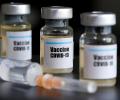
The Pfizer vaccine has already been approved for the public in the United Kingdom and, Canada.

The govt warned the second wave of coronavirus infection in India was not yet over even though the weekly positivity rate was showing an overall declining trend.
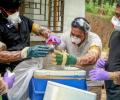
Nipah virus infection is a newly emerging zoonosis that causes severe disease in both animals and humans.
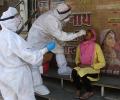
"Lockdown and containment (measures) have been successful in keeping it low and preventing rapid spread," ICMR Director General Balram Bhargava said, citing the sero-survey on COVID-19 spread.
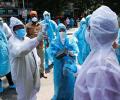
'Corona will go on for more than six months now in Mumbai city.' 'It cannot vanish within just two or three months.' 'This infection may remain there in communities, somewhere or the other, like swine flu.'
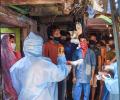
'Testing is a very good strategy if only symptomatic people are transmitting the disease.' 'Here asymptomatic people, with minimum, trivial symptoms, are transmitting too.' 'Testing, treating, tracing contacts and quarantining them -- yes, it will work up to a certain extent.' 'But more important is physical distancing, hand hygiene, cough etiquette and cocooning, protecting with reverse quarantining the most vulnerable people, senior citizens, people with other major medical problems.' 'To me, that makes much more sense.'
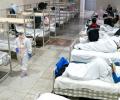
A 55-year-old from Hubei province could have been the first person to have contracted the viral infection on November 17 last year and cases rapidly began piling up since then, it said, without revealing the gender of the individual.
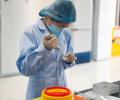
Shi explained that she and a group of researchers obtained samples of coronavirus on December 30 last year and performed high-throughput sequencing of the samples and the isolation of pathogens.

'You can still acquire the COVID-19 virus even if you are vaccinated.' 'But if you develop the disease, (after being vaccinated) the likelihood is that it will be mild.' 'It just makes sense to continue to take precautions, because you may be around a lot of unvaccinated people.'

From these past studies, the scientists said both the aerodynamics of the droplets, and their heat and mass exchange process with the environment can determine the effectiveness of virus prohttps://www.rediff.com/news/report/pix-how-indians-are-maintaining-social-distance/20200326.htmpagation.
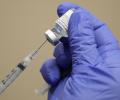
As the country eagerly awaits an expected coronavirus vaccination drive in January, at least 125 intended beneficiaries each in four states who had registered on the Co-WIN App were on Monday sent SMSes informing them about the time and place of their 'COVID-19 vaccination' under a mock-drill to administer the shots at designated centres.

The doubling time of coronavirus cases has slowed down to 13.9 days in the last three days.

'Serial testing is much more valuable than a single test which reflects just a point in time.'

The recoveries have surged to 20,37,870 in the country, while there are 6,76,514 active cases of COVID-19, according to the data updated at 8 am. The record high recoveries have ensured that active cases of coronavirus infection, the 'actual caseload' of the country, currently comprises less than 1/4th (only 24.45 per cent) of the total cases.
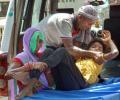
An entirely preventable disease claimed the life of 173 children -- thanks to state apathy.

Director of the National Centre for Disease Control (NCDC) Dr Sujeet Kumar Singh said the remaining 77 per cent are still vulnerable to the viral disease and containment measures need to continue with the same rigour.

Do not ignore any pain, burning sensation, fever or vomitting. If unattended, it could be fatal, says Dr Amjad Khan Pathan.

The disease could go down several paths. One possibility, the least likely, is that it will just disappear. The most likely is that it will have seasonal impact, says Devangshu Datta.

The smog reduced the visibility to merely 300 meters in the morning affecting traffic, an official of the India Meteorological Department said.

These vaccines have not yet been approved by the World Health Organization

'The genetic thing is not in your control. The virulence is not known.' 'The only thing is if you can avoid it.' 'Once you get COVID-19, none of it is in your control.'

It is important to visit an obstetrician as soon as you miss your first period after intercourse, suggests Dr Danny Laliwalla.

'Right now there are two battles, the one in our heads about the pandemic and 2, the actual pandemic itself.'

The states and UTs having a recovery rate higher than the national average include Ladakh (85.45 per cent), Delhi (79.98 per cent), Uttarakhand (78.77 per cent), Chhattisgarh (77.68 per cent), Himachal Pradesh (76.59 per cent), Haryana (75.25 per cent), Chandigarh (74.6 per cent), Rajasthan (74.22 per cent), Madhya Pradesh (73.03 per cent) and Gujarat (69.73 per cent).

India on Sunday opened a third hotline in view of 'large number' of phone calls from the Indians who are mostly students, the Indian Embassy in Beijing said.


The first part of the study conducted by the Indian Council of Medical Research (ICMR) revealed that 0.73 per cent of the population surveyed showed evidence of past exposure to SARS-CoV-2, and that urban slum population was the most vulnerable to the infection, ICMR Director General Balram Bhargava said at a press conference.

How can we protect ourselves against superbugs?
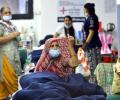
'Social distancing, wearing masks and hygiene should be practised more strictly.'' 'People should not assemble in close spaces as the micro droplets may hang in the air and can last for a longer time.'

'We started analysing young patients and realised that they had causes like undetected diabetes, which suddenly flares up during COVID-19.' 'Secondly, hypothyroidism was one of the factors.' 'And obesity.'

Of the 23.9 million vaccinators who provide vaccination under the universal immunisation programme, 15.4 million will be used for Covid vaccination.

The Indian nationals, mostly students, research scholars and professionals are working in Indian and international companies in the Chinese province.

Kerala, Karnataka, Tamil Nadu and Telangana have announced a lockdown of educational institutions, malls and other places that attract people in large numbers, even as some of them have been reporting increase in positive cases.

'If a doctor is kind of trying to say that there's an urgency, relatives should definitely get a second opinion.'
